
The vineyard
« Excellence owes nothing to chance, it is the fruit of the most absolute demand. »
Unknown author
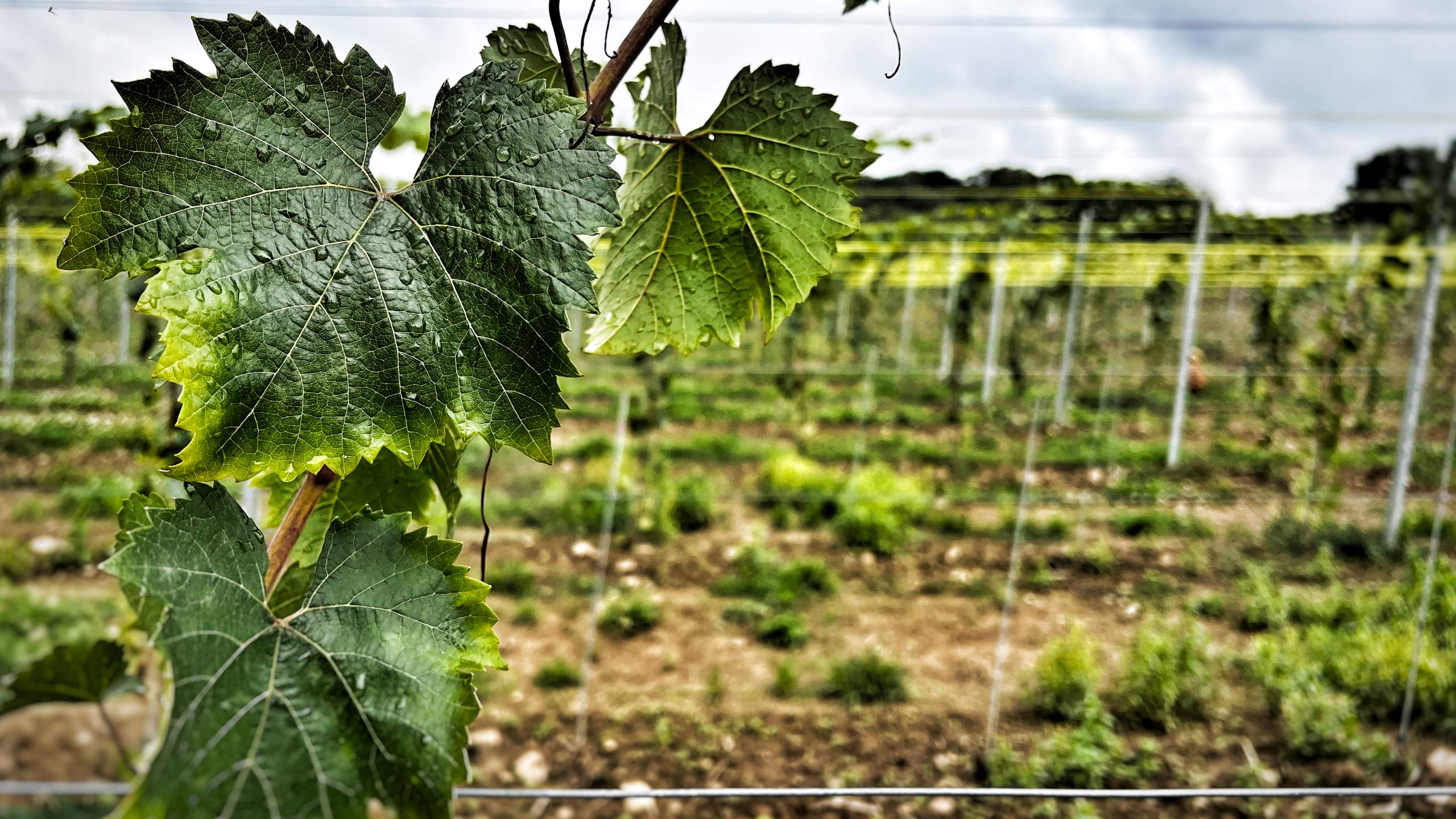
The grape varieties
The specificities of our terroir and the climate of our region — close to those of Champagne — led us to craft our wines from two exceptional grape varieties: Chardonnay and Pinot Noir. From these two varieties come our three signature cuvées today, and soon our premium sparkling cuvée, expected for October 2027.
Chardonnay and Pinot Noir find on these slopes an exceptional terroir, blending schist, clay and limestone, where they express freshness, tension and depth with precision.
Chardonnay is a white grape variety originating from Burgundy. Our Domaine offers it the soils it particularly enjoys — schist, clay and limestone. Depending on the soil composition and climate, it displays different characteristics: lively and mineral in cool-climate regions, more supple on southern lands.
Pinot Noir is a grape variety well suited to northern climates, found in the great European vineyards: Burgundy, Champagne, Germany, Switzerland — and now Belgium. Like Chardonnay, it thrives in our terroirs blending schist, clay and limestone. A demanding variety, it gives rise to structured red wines, delicate rosés, as well as traditional sparkling wines.
Vineyard features
The vineyard of Domaine “Les IV Seigneurs” faces due south, on the slope overlooking the Sambre.
Cultivated on an exceptional terroir, bathed in sunshine from the first warm days, the conditions are ideal
for producing wines of the greatest finesse.

Location
The Domaine is located in the place of the same name, on the border between the villages of Flawinne and Floreffe. Flawinne belongs to the municipality of Namur, in the heart of Wallonia, Belgium.

Grape varieties planted
65% Chardonnay
35% Pinot Noir

Domaine size
Today, our vines extend over 5.8 hectares, following the acquisition of additional land. We are ready to continue our development in the years to come.
The production stages
Field preparation
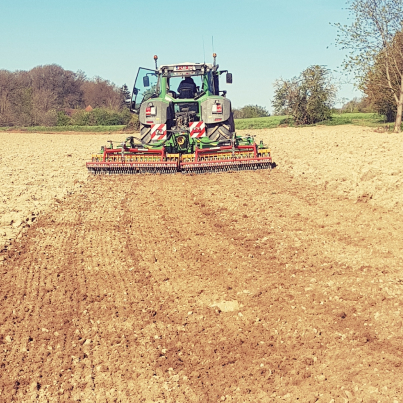
Once the project was validated, we prepared the land (former fallow) on which we would plant by carrying out the following stages: weeding, ploughing, stone collection, vibrocultivation…
Planting
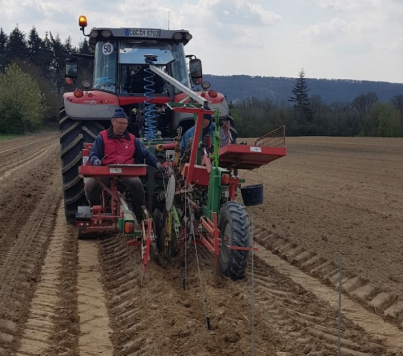
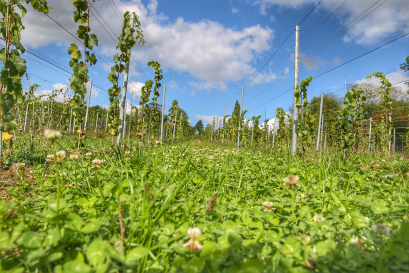
We then established a planting plan: 1 vine per metre, 2.30 metres between rows. Our method differs from the Champagne method (around 8,000 vines/ha) as we favour high trellising (foliage between 1 and 2 metres high). This configuration offers several advantages: increased leaf surface (photosynthesis, sunlight exposure, evapotranspiration…) and time savings through the mechanisation of certain tasks.
Le 1er mai 2021, 10.669 pieds ont été plantés de manière mécanique, au GPS, pour obtenir un alignement parfait des pieds et une plantation homogène des racines. Cette méthode, qui peut paraitre plus onéreuse, garantit une qualité de plantation et est gage de bonne reprise.
Watering
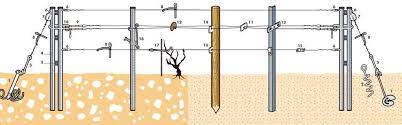
Once the vines were planted, the worry of watering set in! The weather, as for any farmer, became our greatest concern. We had anticipated mass watering, but the rain finally arrived, and never left! In September 2021, the trellising was installed.
Care during the first years
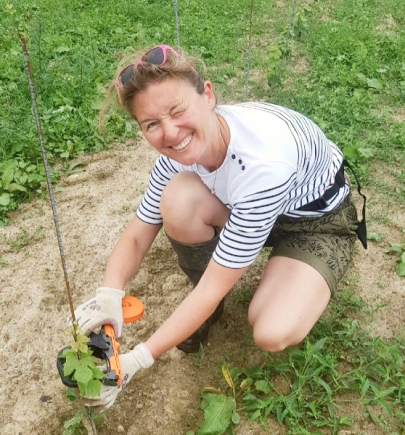
Vine cultivation is time-consuming. This very vigorous climbing plant is acrotonic. It requires regular and rigorous pruning to control the production of plump bunches with quality grapes. As it sprouts again, the plant grows 2 to 4 shoots. We select the most vigorous one to attach to the stake and eliminate the others. It takes 2 or 3 passes through the entire plot to tie the shoots to the stakes, depending on their growth.
In March 2022, we re-pruned the vines to 2 buds to ensure good rooting.
We also monitor the growth of the shoots using tying pliers. From 2023 onwards, we will prune to form the head below the first wire and keep two fruit-bearing canes.
Annual care
Each year, the same tasks repeat themselves, paced by the seasons. The vines awaken in spring and intensify our activity, whether for soil work or work on the vines themselves.
- Travail du sol: débuttage, désherbage, l’enherbement, décompactage, remise à plat, enfouissement d’un engrais vert, etc.
- Travail de la vigne : ébourgeonnage/épamprage, palissage (sarments sur les fils horizontaux) et levage des rameaux, le rognage, l’effeuillage traitement de la vigne (oidium, mildiou, …)
Dès le mois de juin, avec la floraison, le viticulteur procède à l’accolage (lier les jeunes rameaux contre les fils de fer) et au rognage (ou écimage) pour contenir la croissance de la vigne. S’il y a trop de grappes, il faut également éclaircir les vignes en ôtant les grappes surnuméraires.
Bien évidemment, dès l’arrivée de l’automne les vendanges ont lieu selon de nombreux facteurs, dont le degré de maturité de la baie.
A partir du mois de décembre, il est temps d’effectuer la taille. Pour les plus petites parcelles, celle-ci peut commencer au mois de janvier, mais doit être finie au plus tard pour fin mars car comme le dit le dicton : « Taille tôt, taille tard, mais taille en
mars ! »
Discover our cuvées
Our three cuvées — L’Essentiel, Isabelle and Révélation — embody a demanding, considered approach to winemaking, crafted on lands steeped in more than three centuries of history. Discover them, taste them, share them.